
Cynthia Hawkins

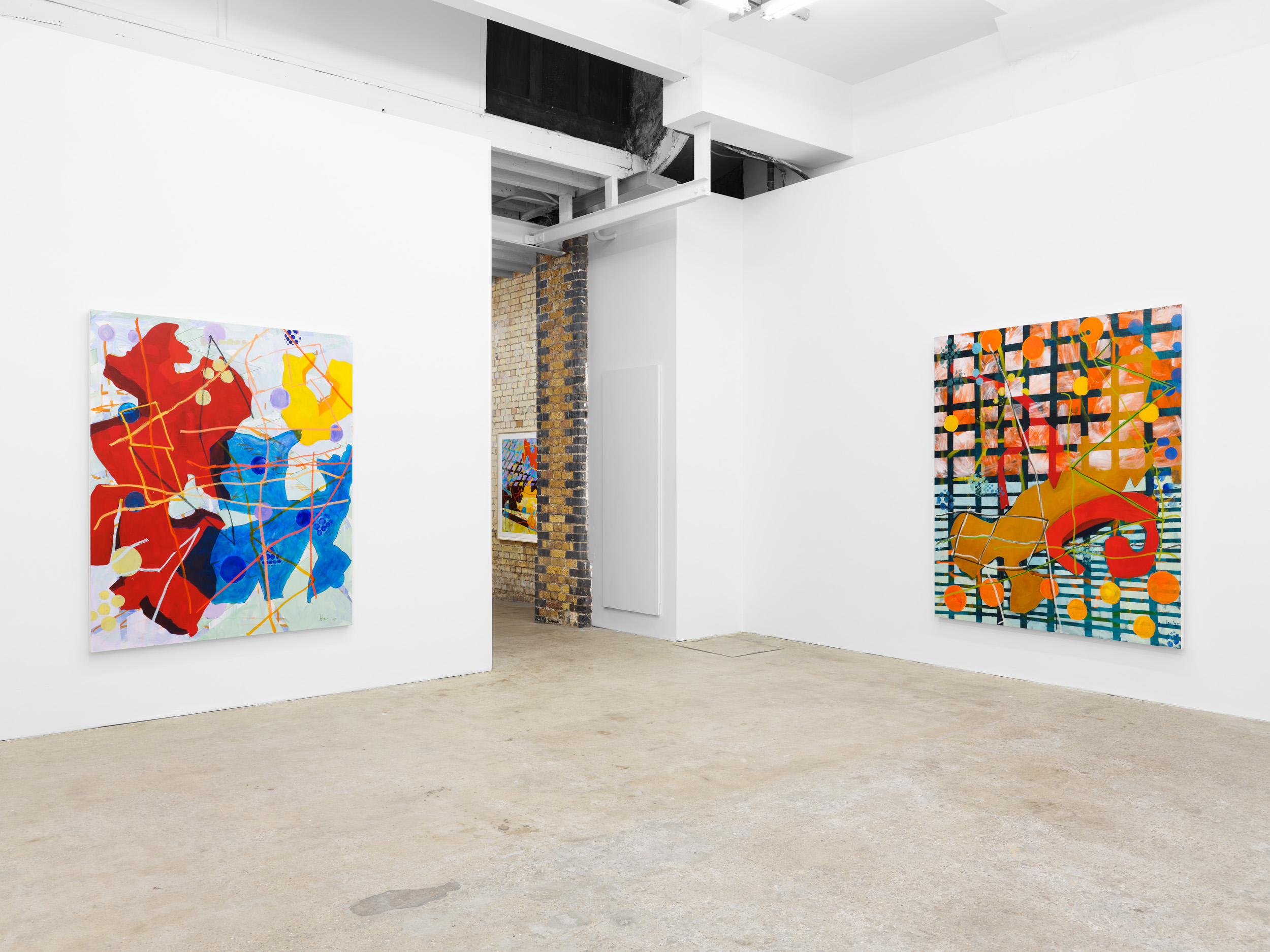
‘In Chapter 4: Maps Necessary for a Walk in 4D #10, we find a form of dimensionality that is curious in the context of Hawkins’ referential abstraction. Dimensionality here appears as modelling, the illusionistic recession of form in perspectival space, if only a pantomime of it. Hawkins based these biomorphs on a photo of an asteroid, and figures the same asteroid in three different aspects. Red, blue, and yellow: they take up enough space that one wants to say they occlude the canvas, as though there were something else to see beneath them. But unlike the inveterate flatness of so many of Hawkins’ shapes, here there is the barest suggestion that the shapes bend into a third dimension.
It’s as if here, at this last moment before leaving the series, Hawkins has wanted us to connect the ways she’s invented to hold her worlds together with those older painting traditions where the ligament is given by perspectival technologies. The suggestion might be that the figurative is not enemy to the abstract, in Hawkins’ ways of reckoning it. That this distinction is not entailed in her tradition of abstraction. Her abstraction is a cosmology. A mesh that is never certain of its coordinates, only its tendencies and its traditions for unlearning and mending. In Hawkins’ ligamental abstraction, there are no enemies, only obstacles, assays, re-assessments, and moving on.’
Kris Cohen, ‘Ligamental, Dimensionality Ununified’, Hollybush Issue 19
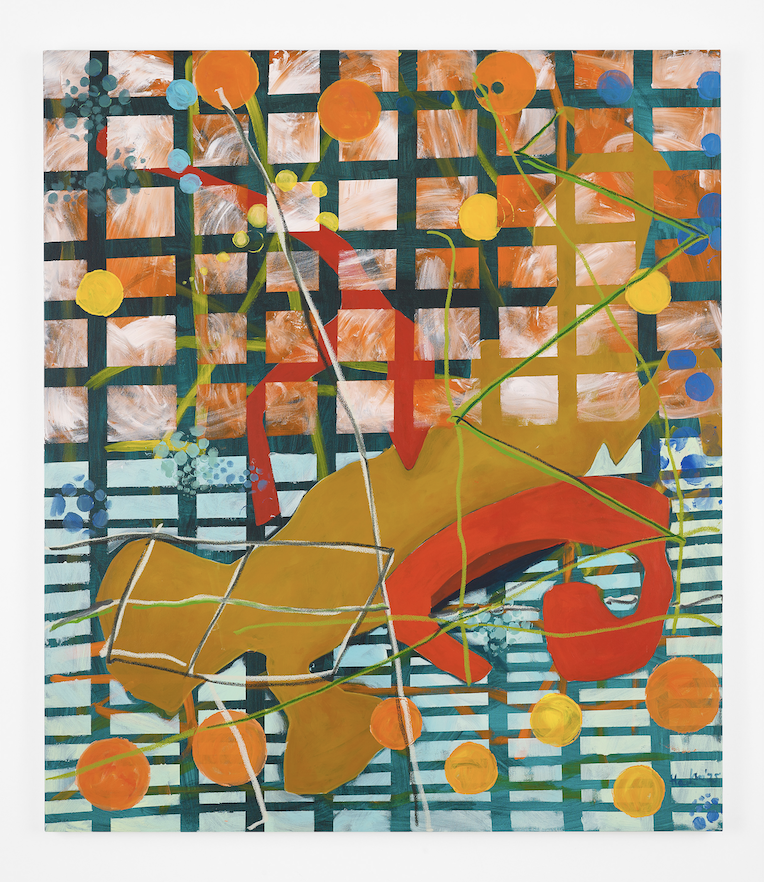
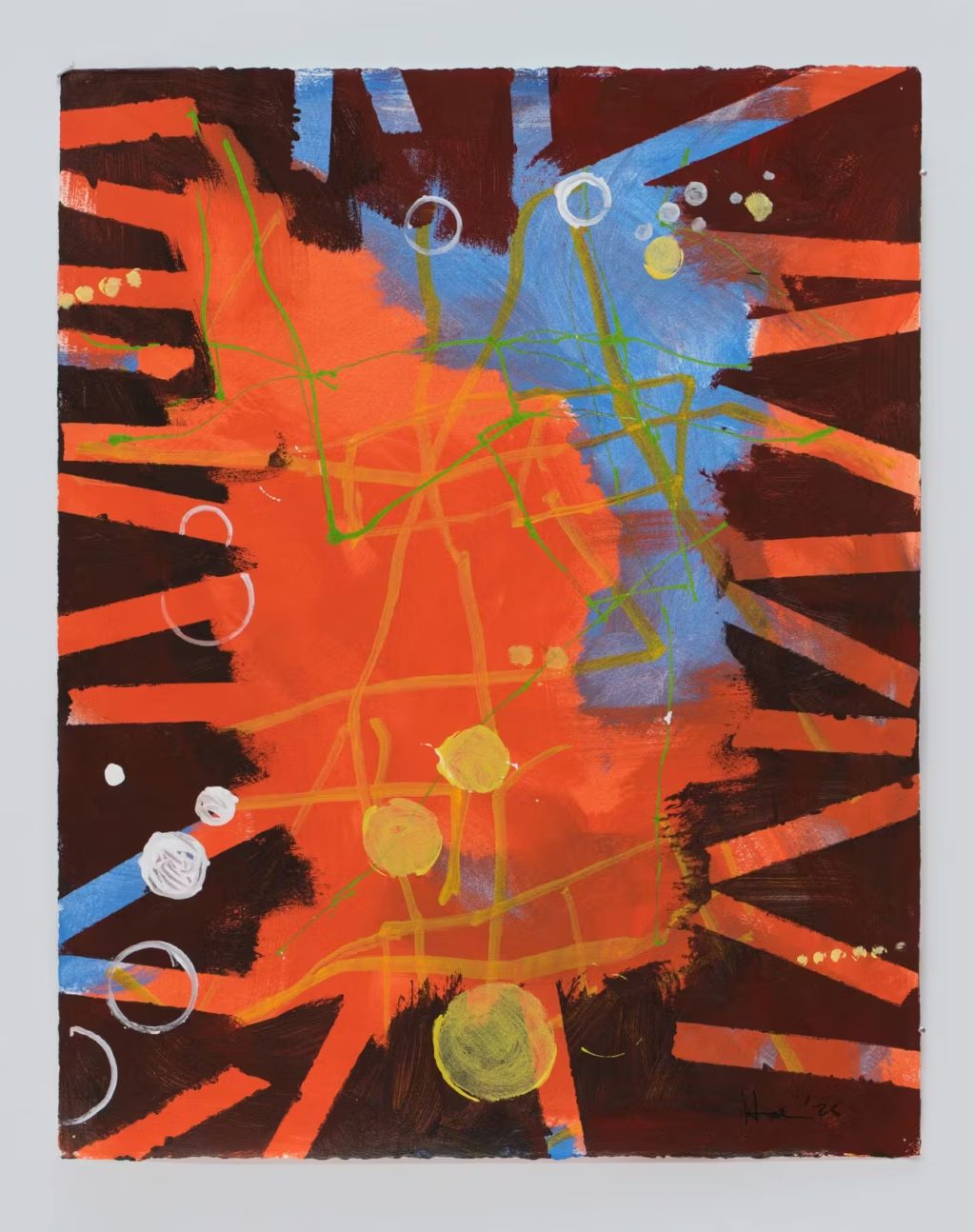
‘The worlds in Hawkins’ four-part ‘Maps’ series take form in relationship to a long history of thinking about how to render a walk in four dimensions. The original sketches were little more than a simple line on paper, working at some right angles that torque into other dimensions. But something held her attention. More recently, Hawkins has come to revitalise these drawings in relation to the stick charts of the South Pacific islanders. These charts map a watery cosmos of swells and currents. They are maps as pedagogies, ways of teaching a bodily relationship to ocean navigation. They are a form of abstraction, ‘a history of spacetime.’ Stick charts map the ligaments of ocean travel: the waves, the currents, the swells, the diffraction patterns made when swells encounter islands. Everything is movement, not stilled but slowed down for teaching, for showing, for talking it through before the journey.’
Kris Cohen, ‘Ligamental, Dimensionality Ununified’, Hollybush Issue 19
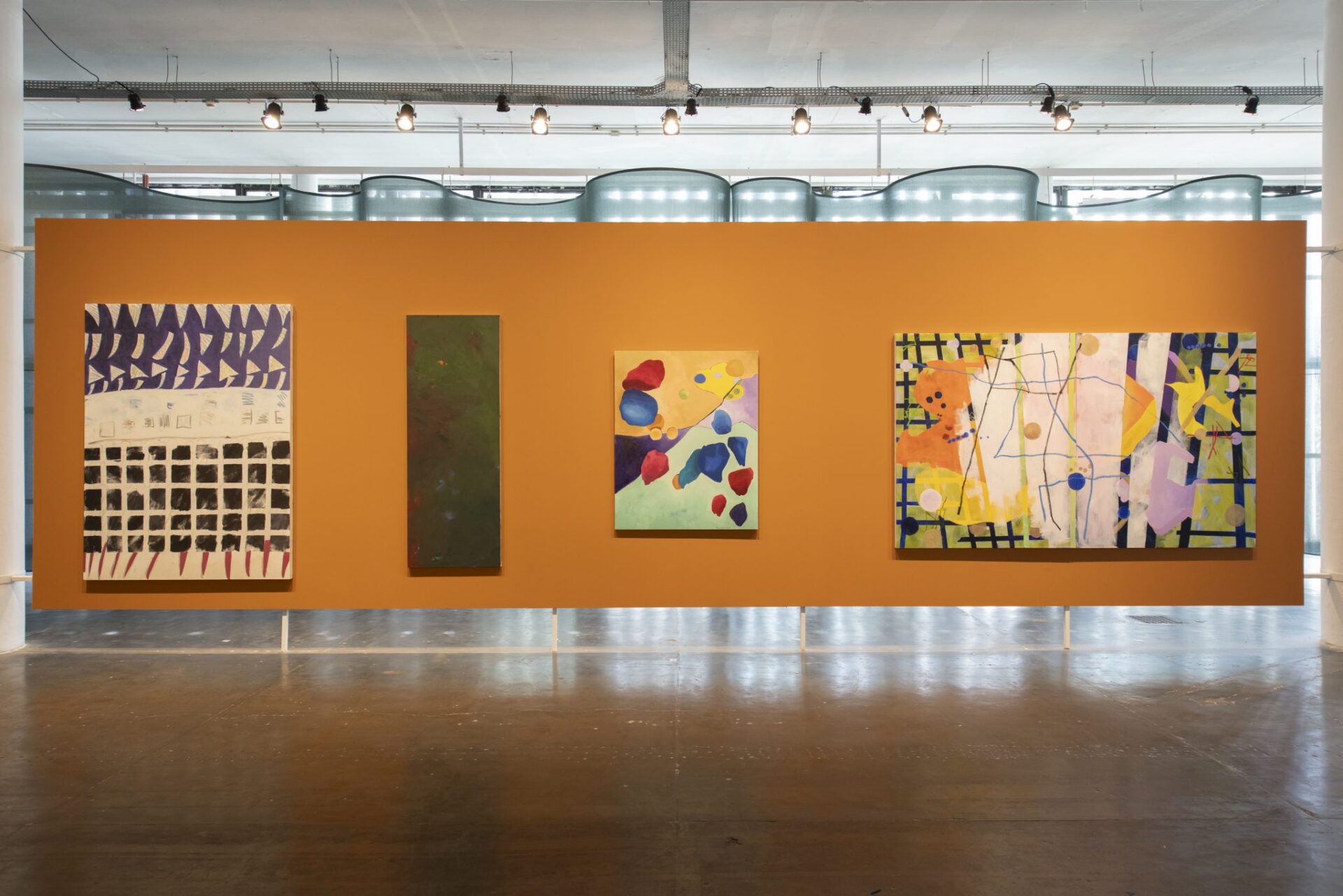
Not All Travellers Walk Roads – Of Humanity as Practice, installation view, 36th Bienal de São Paulo. Photo: Levi Fanan
‘A journey through Cynthia Hawkins’ work reveals the maturation of a highly individual exploration through the permutations of colour, light, and space in two dimensions. Hawkins has always been intrigued with space – both known and unknown. Her stylistic meanderings always come back to the same essential truth – picturing planar realities on canvas.’
— Thelma Golden


Maps Necessary For A Walk In 4D, installation view, STARS Gallery, Los Angeles, 2024. Photo: Paul Salveson
Hawkins has investigated the potentials of abstract painting since the 1970s. While often beginning a work or series with a predetermined conceit or strategy, Hawkins’ process-oriented practice simultaneously embraces the improvisational to create a systemised space for her continually evolving vocabulary. Her early works on canvas used systems of geometry to explore fundamentals of space and space-time to investigate three and four dimensional movement. Concurrently she charted the development of symbolic language through the introduction of sequences of shapes and signs that are, as she has written, ‘strung together [to] imply a sentence or a passage of text’.
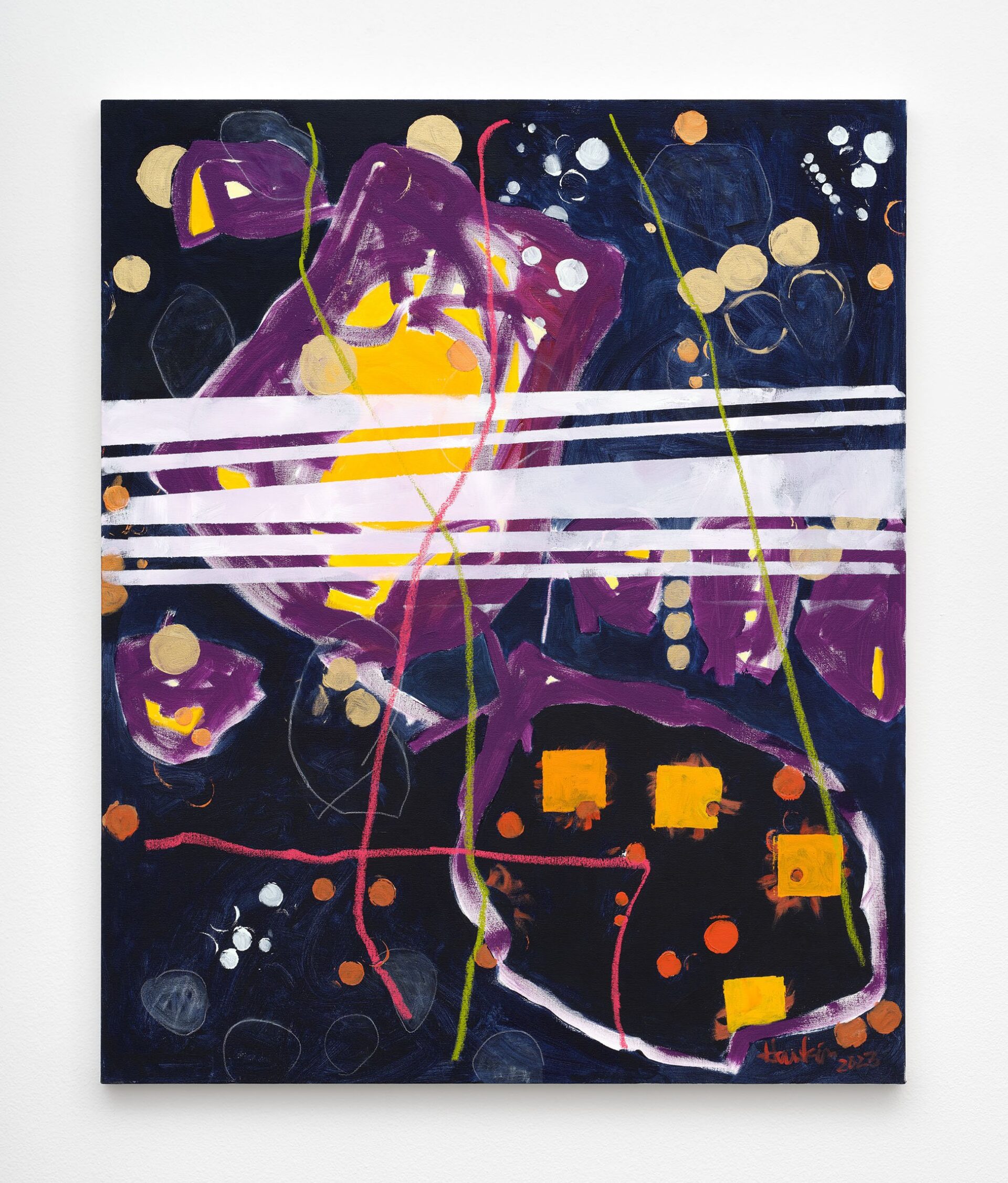

Gwynfor’s Soup, or The Proximity of Matter, installation view, Ortuzar Projects, New York, 2023. Photo: Dario Lasagni

Natural Things 1996–1999, installation view, STARS Gallery, Los Angeles, 2022.
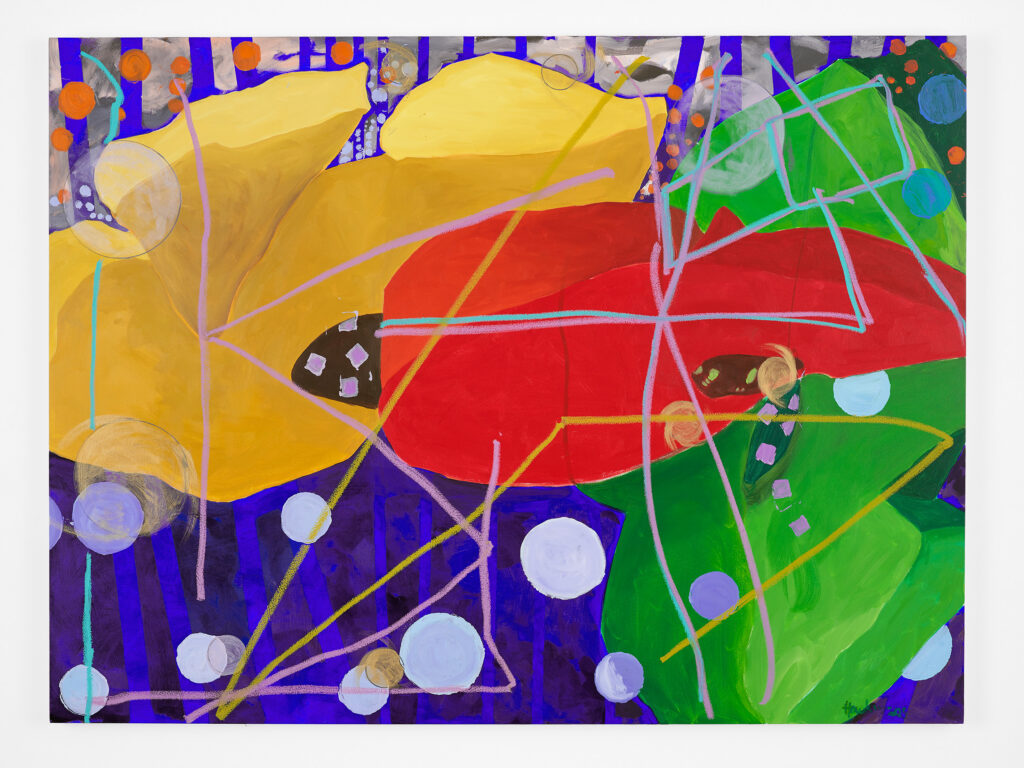
While her work in the late 1990s shifted towards the abstraction of references sourced from the physical world – from the forest floor to microbiological contours and astronomic forms – Hawkins maintains that her ‘practice is abstraction’. Hawkins subverts expectations of figuration as a de-facto-political mode, offering the non-objectivity of her chromatic worlds as a way into painting’s social possibilities. The intertextual relationships between symbols, signs, geometric contours, and calligraphic marks merge into an ecosystem of forms that develop the painterly beyond mere expressionism.

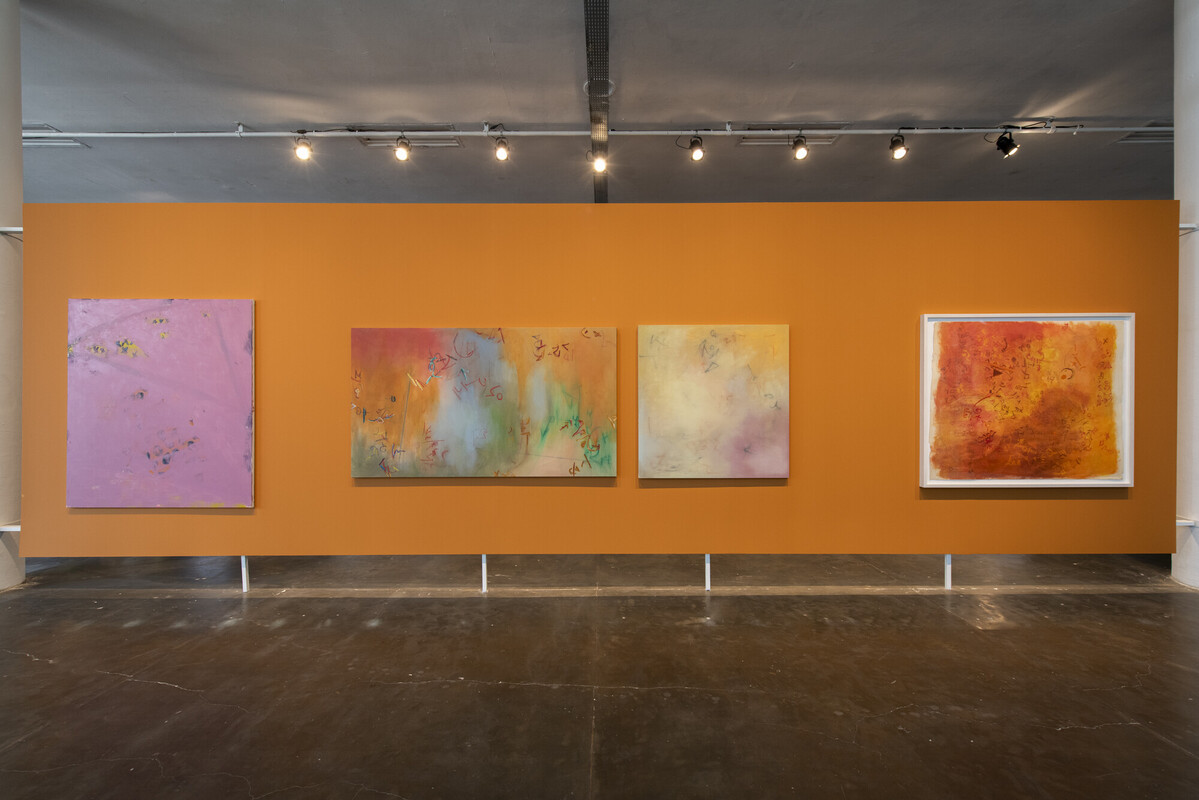
An excessive ellipse, a sort of distribution, installation view, Hollybush Gardens, London, 2023. Photo: Eva Herzog

Signs of Civilization #7, 2007–10, acrylic and oil bar on paper, 89 x 119 x 3.5 cm

Signs of Civilization #9, 2007–10, acrylic and oil bar on paper, 89 x 119 x 3.5 cm

Clusters: Eta and Acrux Don’t Live in the Same Neighbourhood, 2004, acrylic on canvas, 127 x 102 cm

Clusters: Pi Scorpii, 2004, acrylic on canvas, 127 x 102 cm

Clusters: Cephus, Cephus, Cephi, 2004, acrylic on canvas, 127 x 102 cm
EXHIBITIONS at Hollybush Gardens


TEXTS
Painter Cynthia Hawkins Makes Her Own Rules Through Her Abstractions by Alex Greenberger
Artnews, 19 September 2025
Cynthia Hawkins’ Art Notes, Art by Megan N. Liberty
Brooklyn Rail, 8 March 2025
Cynthia Hawkins in conversation with Janet Olivia Henry, moderated by Rachel Valinsky
CARA, New York, 12 December 2024
An Oral History with Cynthia Hawkins by Julia Trotta
BOMB, 2 July 2024
Cynthia Hawkins by Ksenia M. Soboleva
BOMB, 2 August 2023
Gumbo Ya Ya: Anthology of Contemporary African American Women Artists
Midmarch Arts Press, 1996
The Art of Black American Women: Works of Twenty-Four Artists of the Twentieth Century by Robert Henekes
McFarland, 1993
Videos
BIOGRAPHY
Cynthia Hawkins (b. 1950, Queens, New York) lives and works in Poughkeepsie, New York. She received a BA in painting from the Queens College, City University of New York, an MFA from Maryland Institute College of Art, and a doctorate in American Studies from the University of Buffalo, SUNY with a dissertation titled, ‘African American Agency and the Art Object, 1868-1917’. Informed by her work as a historian and curator, her art practice wrestles with the history of abstraction across the 20th century, embracing formal reinvention as a fundamental task of painting. Collapsing distinct strategies of painting into a single composition, she builds up layers as distinct planar realities, which are then revealed through breaks or transparencies in their over-painting.
Hawkins participated in the burgeoning black-owned gallery scene of New York’s 1970s and 80s. Solo exhibitions include Cynthia Hawkins, Just Above Midtown, New York (1981); Cynthia Hawkins, Frances Wolfson Art Center, Miami (1986); New Works: The Currency of Meaning, Cinque Gallery, New York (1989); Selected Works: 1990–1996, Queens College Art Center (1997); Clusters: Stellar and Earthly, Buffalo Science Museum, Buffalo (2009); Natural Things, 1996–99, STARS, Los Angeles (2022); Gwynfor’s Soup, or the Proximity of Matter, Ortuzar Projects, New York (2023); Maps Necessary for a Walk in 4D, STARS, Los Angeles (2024) and Wander/Wonder: Maps Necessary for a Walk in 4D, kauffmann repetto, Milan (2024); Maps Necessary for a Walk in 4D, Paula Cooper, New York and Maps Necessary for a Walk in 4D: Chapter 4, Hollybush Gardens, London (2025). Hawkins is included in the 36th Bienal de São Paulo Not All Travellers Walk Roads and From the Studio: Fifty-Eight Years of Artists in Residence at the Studio Museum in Harlem, New York (2025).
Until recently, Hawkins was the gallery director and curator at the Bertha V.B. Lederer Gallery, SUNY Geneseo, New York. She was included in the survey exhibition Just Above Midtown: 1974 to Present at the Museum of Modern Art, New York (2022). Her work is also in numerous public collections including MOCA, Los Angeles; Sharjah Art Foundation, Sharjah, UAE; The Studio Museum in Harlem, New York; The Bronx Museum of the Arts, New York; Kenkeleba Gallery, New York; The La Grange Art Museum, La Grange, Georgia; and the Department of State, Washington, D.C. She has received many awards such as the Helen Frankenthaler Award for Painting (2023); the Black Metropolis Research Consortium Fellowship (2009); The Herbert and Irene Wheeler Grant (1995); and the Brooklyn Museum Art School Scholarship (1972).